
From Childhood Memories to Real-Life Pilgrimage: Exploring the Tokyo World of Sailor Moon.
From Childhood Memories to Real-Life Pilgrimage: Exploring the Tokyo World of Sailor Moon

Created by Naoko Takeuchi in the 1990s, Sailor Moon (美少女戦士セーラームーン) not only shaped the formative years of many fans worldwide but also turned parts of Tokyo into dreamlike pilgrimage sites for anime enthusiasts. As this iconic series is set in Tokyo, the everyday settings of protagonist Usagi Tsukino (Sailor Moon) and her sailor guardian companions are deeply rooted in real locations. This article invites you to embark on a nostalgic, dream‑infused pilgrimage through Tokyo—walking in Usagi and Rei’s footsteps. Whether you’re visiting Tokyo for the first time as a fan or simply chasing classic nostalgia, you’ll rediscover that familiar thrill.
Why Sailor Moon Choose Azabu-Jūban as Its Setting?
In the anime, Usagi’s home is placed in Tokyo’s Azabu-Jūban. This is no coincidence—it reflects creator Naoko Takeuchi’s personal experience living in the Minato ward around Azabu-Jūban. Her intimate knowledge of the neighborhood’s alleys, shrines, shopping streets, and cultural ambience naturally infused the animation with a palpable realism.
From the routes characters walk to school, to corner parks where friends gather, to shrine scenes at pivotal moments—each detail in the anime conveys authenticity shaped by her lived experience. Hence, Azabu-Jūban isn’t simply Usagi’s fictional home, but an emotional extension of Takeuchi‑sensei’s reality. Today, many fans trace these real-world locations to feel that resonance of shared space and time.
Where Is Azabu-Jūban?
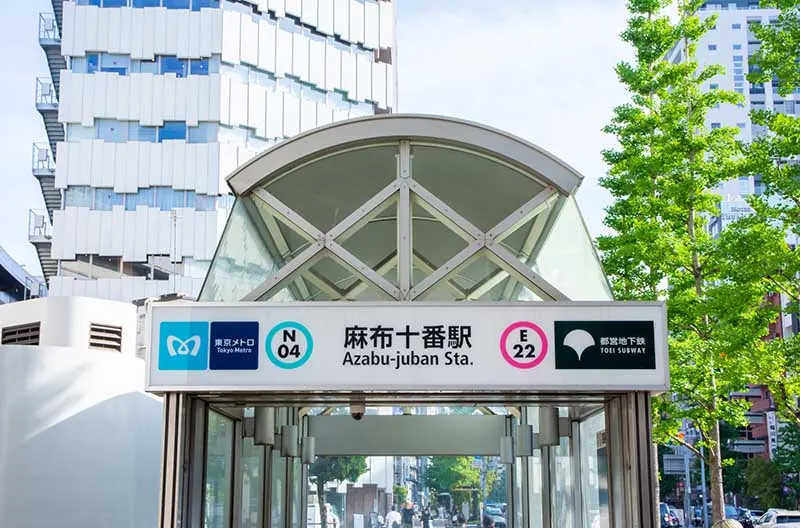
Located in Tokyo’s Minato ward—adjacent to upscale districts like Roppongi and Akasaka—Azabu-Jūban is conveniently connected and well-equipped with amenities. The neighborhood comprises areas like “Azabu-Jūban,” “Moto-Azabu,” and “Minami-Azabu”—among which Azabu-Jūban is the most active commercial and cultural heart, divided into three blocks (1‑chōme to 3‑chōme). It seamlessly blends traditional streets, shopping arcades, cafés, and residential zones—a perfect fusion of daily life and tourism.
What Makes Azabu-Jūban Unique?
Azabu-Jūban’s distinctive charm lies in its blend of Edo-period working‑class culture with contemporary upscale residential ambiance. It features centuries-old wagashi (traditional sweets) shops, artisanal boutiques, trendy cafés, French restaurants—even Michelin-starred venues—creating a rare layering of lifestyles. The area is also home to prestigious academies, international schools, quiet luxury residences, embassy residences, and high average incomes—making it both cosmopolitan and deeply characteristic of Tokyo’s varied urban strata.
Sailor Moon Pilgrimage Itinerary: Where Fiction Meets Reality
1. Azabu-Jūban Shopping Street: Step into Usagi’s Everyday Circle
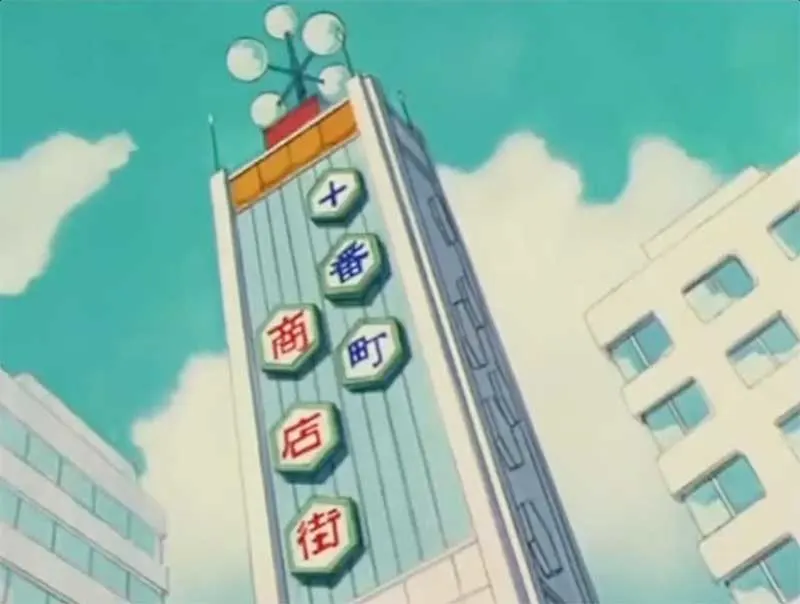
When it comes to a Sailor Moon pilgrimage, there’s no better place to begin than Azabu-Jūban. After all, this is where Usagi Tsukino’s home is located. Her daily school commutes, casual hangouts with friends, romantic encounters with Tuxedo Mask, and even dramatic chases with villains all unfolded right here. The “Azabu-Jūban Shopping Street” sign, which appeared frequently in the anime, is said to have actually existed back in the day. Although it has since disappeared, stepping into this street still instantly evokes the thought: “Ah—this really feels like the kind of place where Sailor Moon would show up.”
From Exit 4 of the Tokyo Metro’s Azabu-Jūban Station, you can walk straight into the shopping street. As you stroll along the main avenue, every corner and every patch of light on the stone-paved roads almost seems to reveal a fleeting glimpse of Usagi and her little black cat Luna, blurring the line between animation and reality.
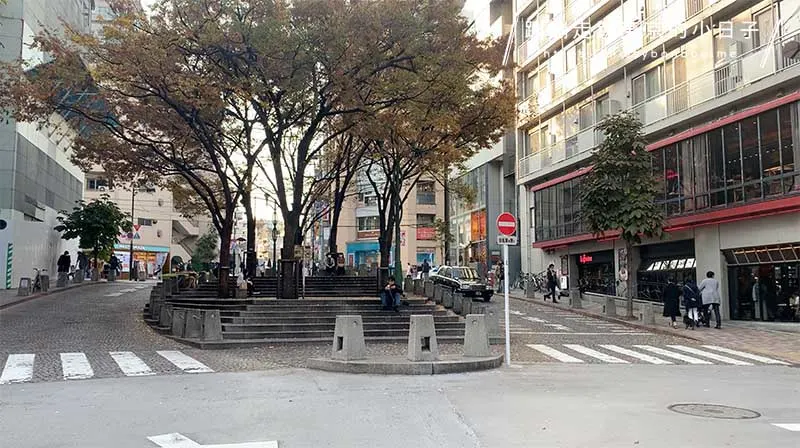
What makes the Azabu-Jūban Shopping Street so charming is its strong shitamachi (old downtown Tokyo) atmosphere. Lining both sides are century-old wagashi (Japanese sweets) shops, retro Shōwa-era cafés, small clothing boutiques, and independent lifestyle stores. Unlike the hustle and fast pace of Tokyo’s busiest districts, Azabu-Jūban offers a slower rhythm—a sense of everyday warmth and comfort. As you wander, don’t forget to look down: cobblestones interwoven with stone slabs lend the streetscape a vintage, understated beauty. This aesthetic is exactly what you often see in the anime. When the image of Usagi and Rei strolling side by side comes to mind, you’ll realize—you’re standing right in the middle of their everyday world.
2. The Red Shoes Girl Statue: A Symbol of Azabu-Jūban’s Heart and Memory
At the small plaza “Patio Jūban,” in the center of Azabu-Jūban Shopping Street, you’ll find a modest little statue quietly standing—the Red Shoes Girl Statue (きみちゃん像). She wears red shoes, her hair tied in braids, and her face carries a faint expression of melancholy. This statue was inspired by the 1922 children’s song “Akai Kutsu” (Red Shoes) by poet Ujō Noguchi, which is said to have been based on the real-life story of a young girl named Kimi Iwasaki.
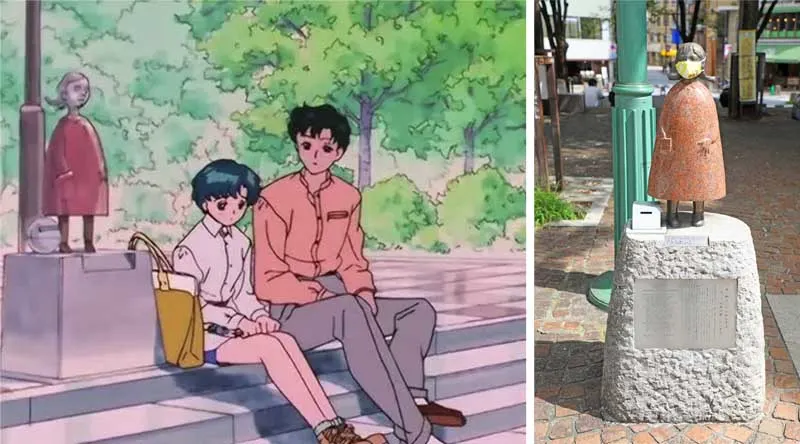
Kimi was sent to a church orphanage in Azabu at a young age and tragically passed away there at the age of nine. Her story moved Noguchi, inspiring the creation of the now-famous lullaby. Over time, she came to symbolize maternal love, separation, and the ties of fate.
Today, the statue serves as a quiet spiritual landmark of Azabu-Jūban. Many passersby still leave a few coins at her feet, almost as if making a wish—or offering a gentle blessing. Though unassuming in scale, the Red Shoes Girl Statue has become a shared memory cherished by both locals and visitors alike.
3. Azabu Hikawa Shrine: Rei Hino’s Miko Training Ground and the Guardians’ Secret Base
In the anime, Rei Hino’s place of spiritual training—Hikawa Shrine—was modeled after the real-life Azabu Hikawa Shrine. Her first appearance in Episode 10, “The Cursed Bus! The Flame Warrior Mars Appears”, is set here, giving this shrine a special place in the Sailor Moon universe.
Although the anime calls it “Hikawa Shrine,” the actual location sits in Moto-Azabu, Minato City. If you compare carefully, you’ll notice some differences between the anime and reality—the real shrine has no stone guardian lions, for example, and the torii gate design differs slightly. Some say the anime’s interior may have been inspired by a combination of several shrines. These small contrasts add to the charm, blurring the lines between fiction and reality.
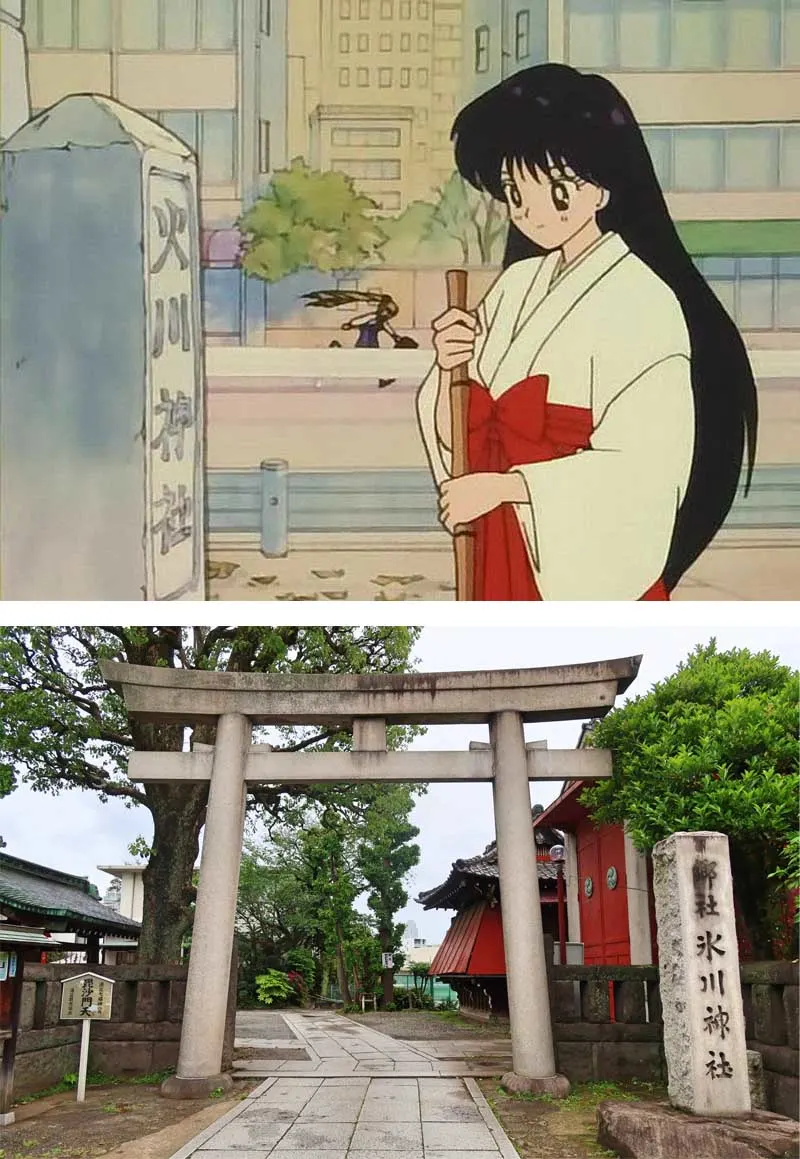
Nestled in a quiet residential neighborhood, with a cemetery just behind, Azabu Hikawa Shrine offers a striking contrast to Tokyo’s bustling cityscape. In the anime, the Guardians often gather here on the shrine’s steps to discuss strategies, and it’s also where enemies suddenly appear. Though not officially recognized as an anime pilgrimage site, it has long been a beloved stop for devoted fans.
Visiting Tip: Please remain quiet and respectful when visiting, as many locals come here to pray and reflect.
【Azabu Hikawa Shrine Information】
Address: 1-chōme, Moto-Azabu, Minato-ku, Tokyo
Access: About 12 minutes on foot from Azabu-Jūban Station
4. Sendai-zaka Intersection: The Mysterious Crossroads Where the Demon Bus Appears
In Episode 10 of the anime, “The Cursed Bus! The Flame Warrior Mars Appears”, the eerie “Demon Bus” driven by a monster appears at none other than Sendai-zakaue.
In real life, Sendai-zaka is a slope about 536 meters long, located in Minami-Azabu, Minato City. The surrounding area is lined with foreign embassies and luxury residences, giving it a distinctly upscale atmosphere. It’s only about a five-minute walk from Azabu Hikawa Shrine, making it easy to visit both locations together.
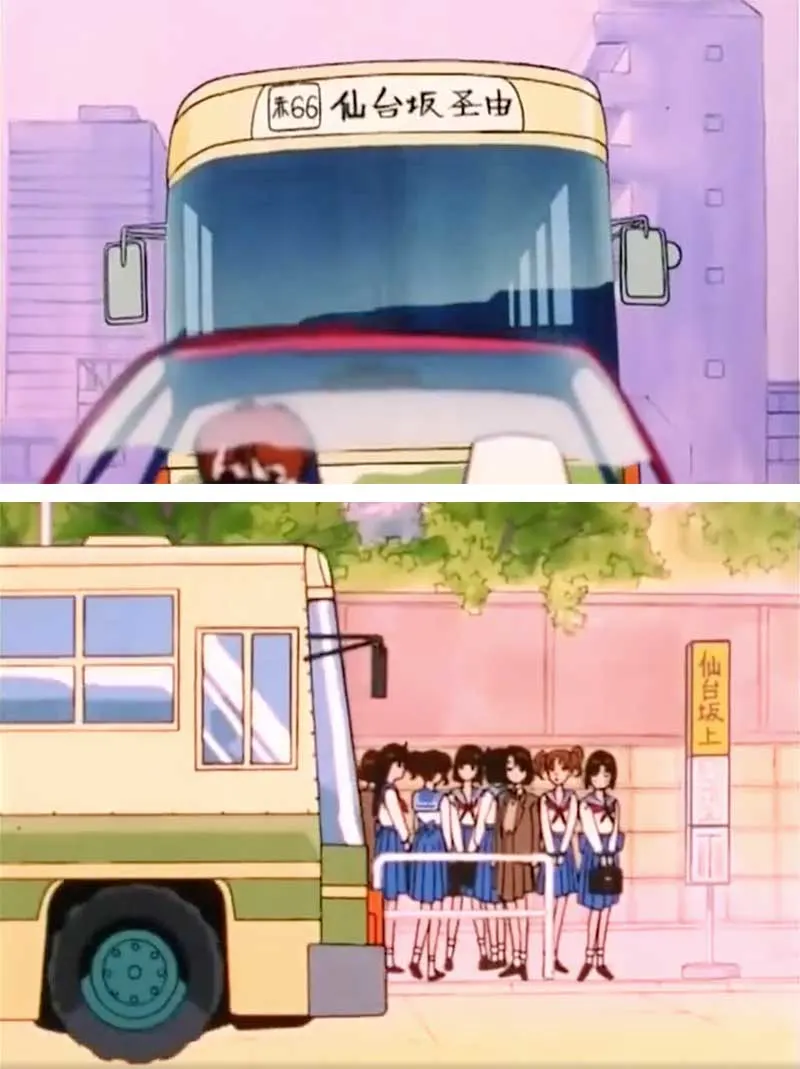
The intersection here is particularly striking: with multiple roads extending out in different directions, it strongly resembles the six-way crossroads shown in the anime. Even today, Toei buses still stop at this point, so fans can easily imagine the Demon Bus pulling up just as it did on screen. This spot is a must-see for anyone retracing Rei Hino’s debut storyline.
Travel Tip: Combine your visit with Azabu Hikawa Shrine for a perfect themed walk—from Rei’s training ground to the starting point of the Demon Bus—bringing her iconic introduction to life.
【Sendai-zakaue Bus Stop & Intersection Info】
Address: Minami-Azabu 3-3-1, Minato-ku, Tokyo (intersection & nearby bus stop)
Access: 10–12 minutes on foot from Azabu-Jūban Station; also accessible via Toei bus.
5. Azabu School Areas & Minato Ward Surroundings: Real‑World Basis for “Jūban Middle School”
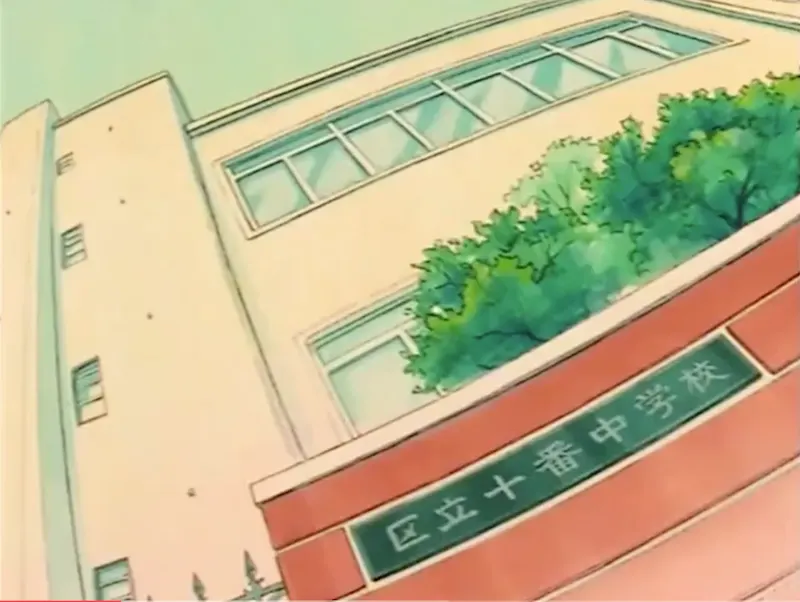
While “Jūban Middle School” is fictional, it is believed to draw inspiration from schools in the Minato ward area. Strolling through academic campuses, embassy-lined avenues, and elegant architecture evokes the youth-centered world of Usagi and her friends.
6. Jūban Inari Shrine: Azabu-Jūban’s Tiny but Beloved Guardian
One of the shrines that appears in Sailor Moon is none other than Jūban Inari Shrine, conveniently located right beside Exit 7 of Azabu-Jūban Station on the Toei Ōedo Line. Step out of the subway, and you’ll see it immediately—making it one of the most accessible and welcoming shrines in the neighborhood.
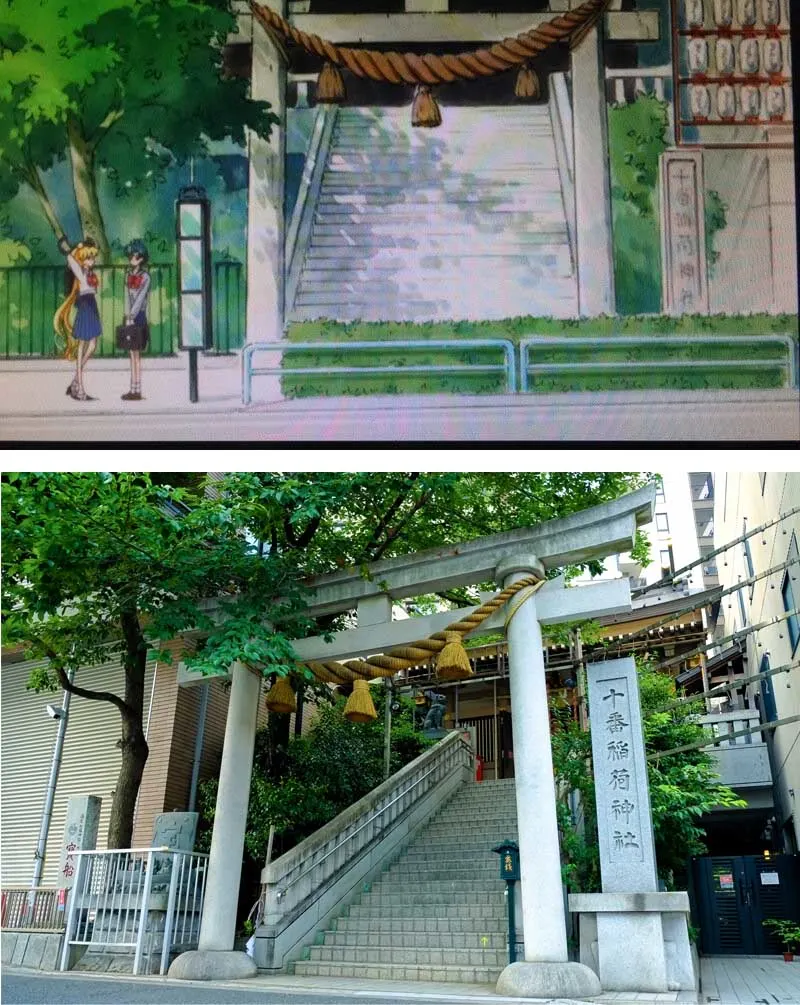
Though small in scale, this shrine serves as the main guardian of Azabu-Jūban, deeply respected by both residents and the local shopping street community. Its most eye-catching feature is the adorable frog-shaped omamori (charms), which symbolize safe returns, smooth travels, and even financial luck. The shrine also enshrines a treasure ship associated with the Seven Lucky Gods, believed to bring happiness, prosperity, and good health. Unsurprisingly, many visitors come specifically to pray and collect these unique charms.
【Jūban Inari Shrine Info】
Address: 1-10-6 Azabu-Jūban, Minato-ku, Tokyo
Access: Directly outside Exit 7 of Azabu-Jūban Station (Tokyo Metro Namboku Line / Toei Ōedo Line)
7. Toriizaka (Torii-zaka) Slope: The School Route & Path to Shrine
The gently winding Torii-zaka Slope is more than just a historic road connecting Azabu-Jūban and Roppongi—it also carries the youthful memories of Sailor Moon. Many of the everyday scenes where the characters walk to school or head to the shrine for training are believed to have been inspired by this slope.
The name “Torii-zaka” comes from the torii (shrine gate) that once stood along the hill. Since the Edo period, it has served as a main route leading to Torii-zaka Church and Toyo Eiwa Jogakuin, a girls’ school nearby. Even today, the slope retains its calm, academic atmosphere, making it one of Azabu’s most culturally rich pathways.
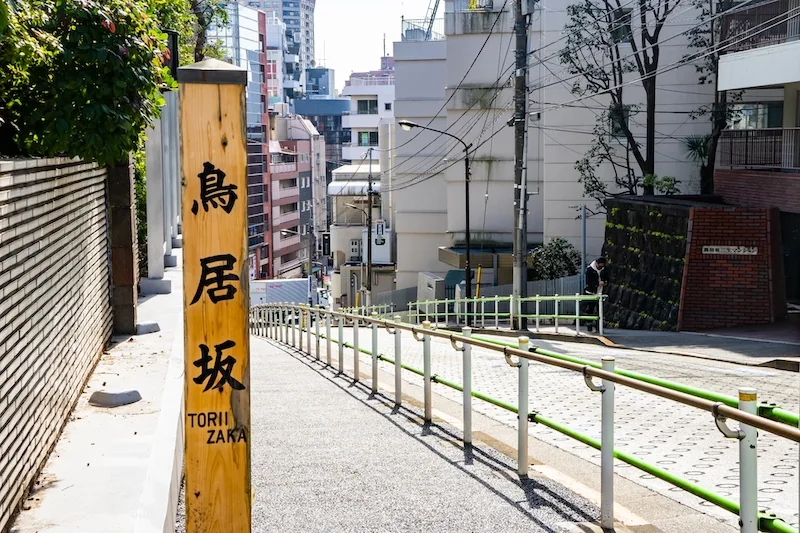
Adding to its charm, Torii-zaka is also home to one of the official “Sailor Moon × Minato City” manhole cover locations, placed right in front of Toyo Eiwa Jogakuin. Fans can literally walk in the footsteps of the characters and relive fragments of their school-day adventures.
Interestingly, Torii-zaka even made its way into modern idol culture: the famous girl group Keyakizaka46 was originally set to debut as Torii-zaka46, using the slope’s name as the theme of their first auditions. Although the group later changed its name, this unique backstory once again placed Torii-zaka in the spotlight as a cultural landmark where history and pop culture intersect.
【Info:】
Torii-zaka: Minato‑ku Roppongi 5 chōme – Azabu‑Jūban 1 chōme (approx. 5 min walk from Azabu‑Jūban Station)
8. Tokyo Tower: Gathering Point & Final Battle Motif
In Sailor Moon, Tokyo Tower serves as far more than scenic backdrop—it’s where Usagi and Mamoru share a romantic date, and where Sailor Guardians unite to transform and confront major enemies. In real life, the red‑and‑white tower offers panoramic views by day and magical illumination by night. Special anime-themed lighting events occasionally take place, making it a quintessential pilgrimage destination for fans and tourists alike.
Fan Highlights: Sailor Moon Manhole Covers in Minato Ward
In March 2024, Tokyo’s Minato City unveiled Japan’s very first set of Sailor Moon-themed manhole covers to celebrate this globally beloved magical girl series. A total of five covers were installed, each placed at a location closely tied to the story—such as Azabu-Jūban, Shiba Park, and Tokyo Tower.
This project is more than just a gift for fans—it transforms the everyday streets of Tokyo into a unique sightseeing experience, where even something as ordinary as a manhole becomes a portal into the world of Usagi and her fellow Sailor Guardians.
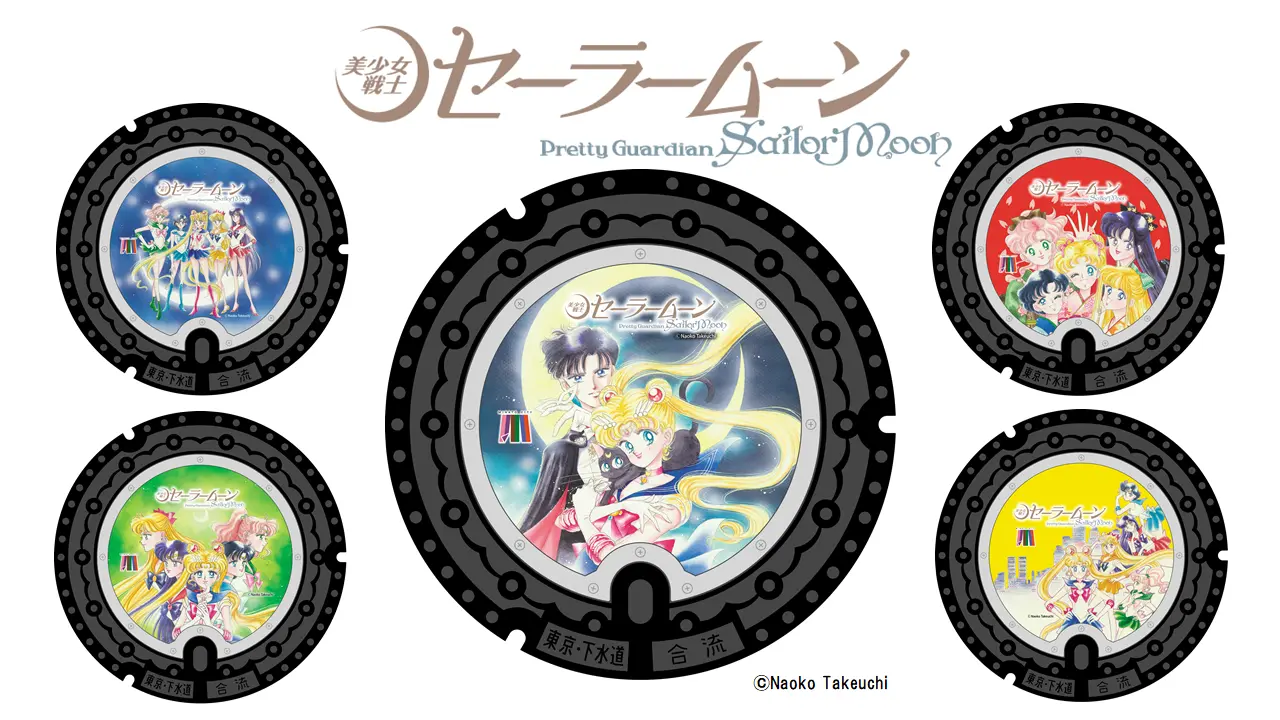
Location :
① Keio Naka‑dōri shopping arcade, near Mita Station Exit A3
② Outside Minato City Library in Shiba Park (near Onarimon Station Exit A1)
③ Near water pump station by Tokyo Tower (15 min walk from library)
④ Opposite main gate of Toyo Eiwa Jogakuin school
⑤ Near Azabu‑Jūban Station Exit 4
- Tip: Download the official multilingual map booklet from Minato City’s website to locate them all. https://www.city.minato.tokyo.jp/citypromotion/manhole.html
For Fans Seeking an Immersive Sailor Moon Experience: Roppongi Hills & Mori Art Museum
Beyond the real-world inspirations for the anime settings, Roppongi Hills and the Mori Art Museum are must-visit destinations for Sailor Moon fans. These modern landmarks of Tokyo’s art and architecture once hosted the Sailor Moon 25th Anniversary Exhibition, featuring original illustrations, recreated scenes, and immersive installations that transported visitors directly into the Guardians’ universe.
The Mori Art Museum frequently curates exhibitions related to Japanese anime, manga, and pop culture. If your trip coincides with a Sailor Moon or other anime-themed event, it’s highly recommended to include it in your itinerary to experience the series’ official world-building and visual aesthetics up close.
Further Reading:
I personally attended the Sailor Moon 20th Anniversary Exhibition at the Mori Art Museum, and you can find my impressions and memories in this article: [Reliving Childhood Memories – Visiting the Sailor Moon 20th Anniversary Exhibition]
Live the Magic on Stage: Sailor Moon The Super Live
To dive even deeper into the Sailor Moon world, consider attending the official live musical production, Sailor Moon The Super Live. This dazzling stage performance combines dramatic lighting, choreography, and original music to recreate the anime’s iconic scenes and characters.
check the official website
Official Sailor Moon Store & Themed Cafés
If you’d like to carry the magic home, don’t miss the Sailor Moon Store in Harajuku—the only permanent official shop. Located on the 5th floor of Laforet Harajuku, this dream destination for fans offers exclusive items such as apparel, accessories, stationery, figures, and collaborative goods. Every item holds collectible value, making it a must-stop pilgrimage point.
I’ve personally bought Sailor Moon cosmetic collaborations here—like themed lip balms and accessories—as unique souvenirs to gift friends back home. They always spark conversations and a touch of nostalgia.

In addition, temporary Sailor Moon-themed cafés occasionally open around Tokyo, serving sweets, drinks, and meals inspired by the Sailor Guardians. These pop-ups combine fantasy presentation with delicious flavors—keep an eye on the official website and social media channels for announcements of upcoming locations.
【Sailor Moon Store Harajuku Info】
Address: Laforet Harajuku B0 5F, 1-11-6 Jingumae, Shibuya-ku, Tokyo 150-0001
Conclusion: From Animated Dreams to Real-Life Tokyo
For us fans of Sailor Moon, Tokyo is no longer just a bustling metropolis—it’s a city of memories, where childhood dreams and beloved characters come alive. From the nostalgic streets of Azabu-Jūban, themed manhole covers, and shrines, to the Tokyo Tower, Torii-zaka slope, museum exhibitions, and live musicals—every corner holds a spark of magic.
Whether you’re recreating anime scenes with photos in hand or simply strolling and soaking in the atmosphere, that familiar thrill of “Moon Prism Power, Make Up!” is bound to rise within you.
This pilgrimage is more than just a trip—it’s a reunion with your childhood self and long-cherished dreams. Put on your inner sailor uniform, follow the guidance of the moonlight, and find your own magical moment in Tokyo.
Note: All facility and shop details in this article are based on the information available at the time of writing. Please confirm the latest details directly with official sources before visiting.